Elif Bulut

INTERACTIVE
COAT RACK

INTERACTIVE
COAT RACK

INTERACTIVE
COAT RACK

A minimal, interactive coat rack that adapts to the userʼs daily routine

A minimal, interactive coat rack that adapts to the userʼs daily routine

A minimal, interactive coat rack that adapts to the userʼs daily routine

A minimal, interactive coat rack that adapts to the userʼs daily routine

Industrial Designer

Personal Project

1 week, 2026

Rhinoceros, Keyshot, Adobe CC (Ps, Pr), Vizcom AI

Industrial Design, UX Design, Concept, Visulation, Animation
Overview

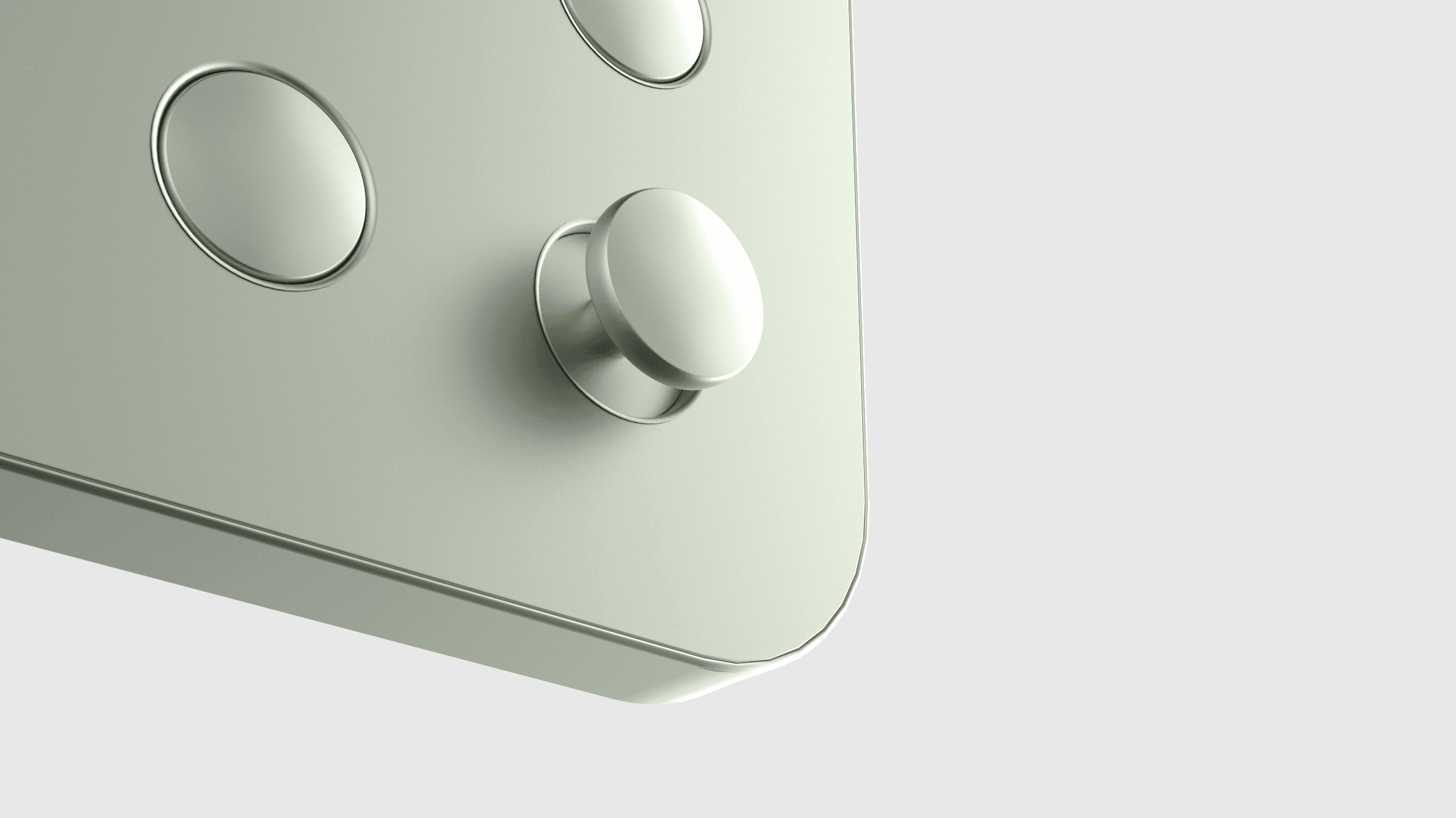
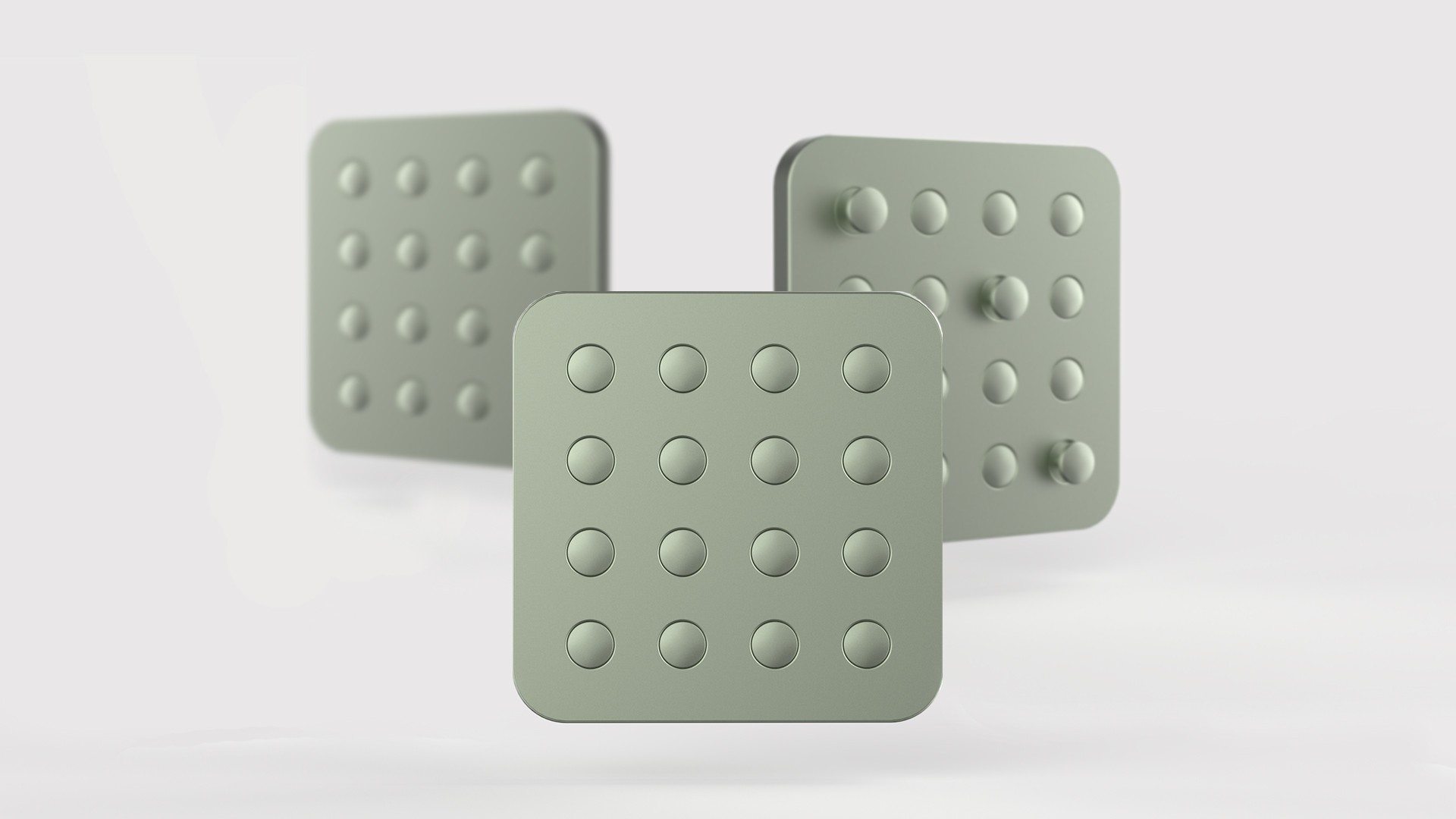
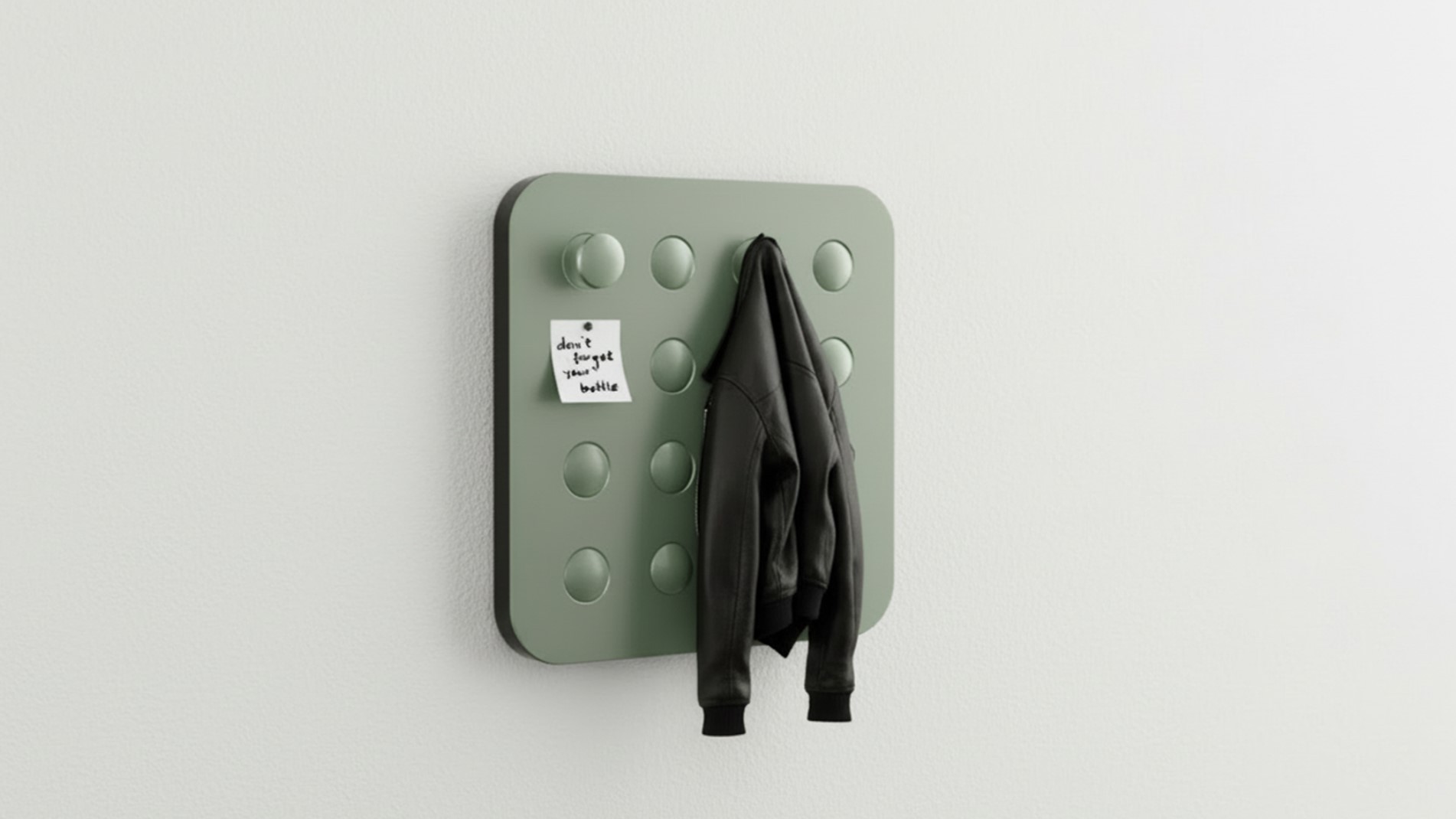
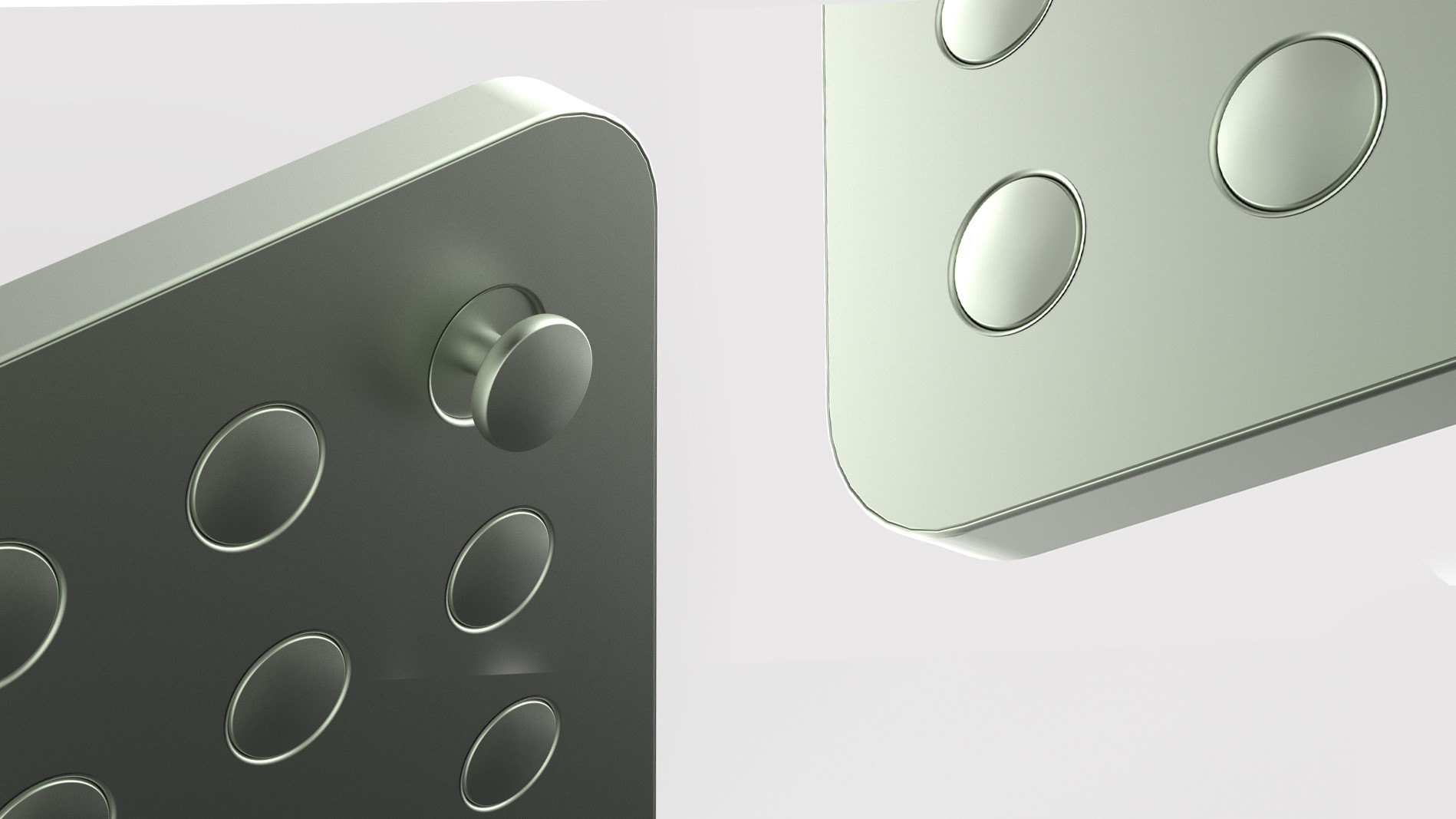
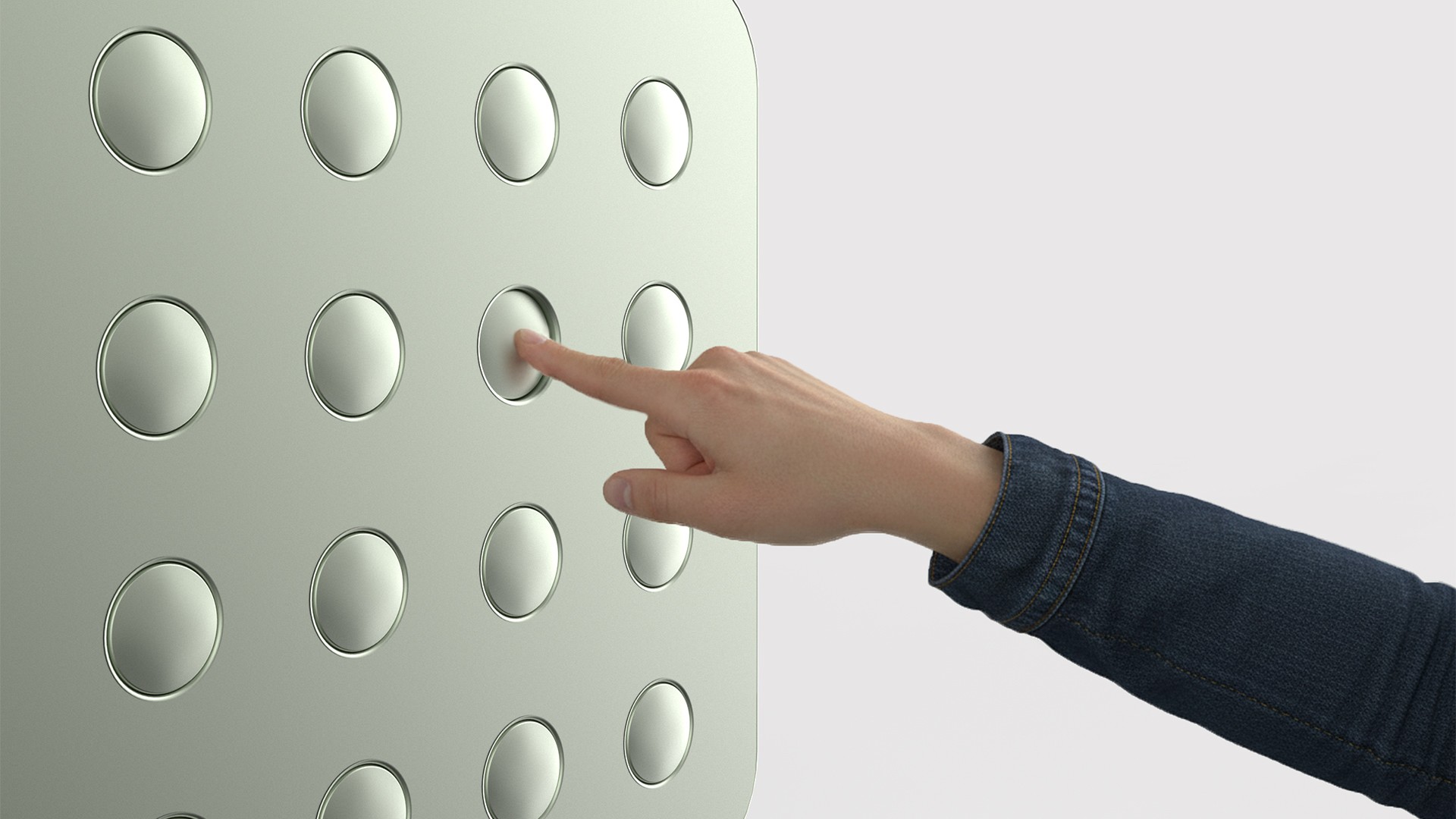
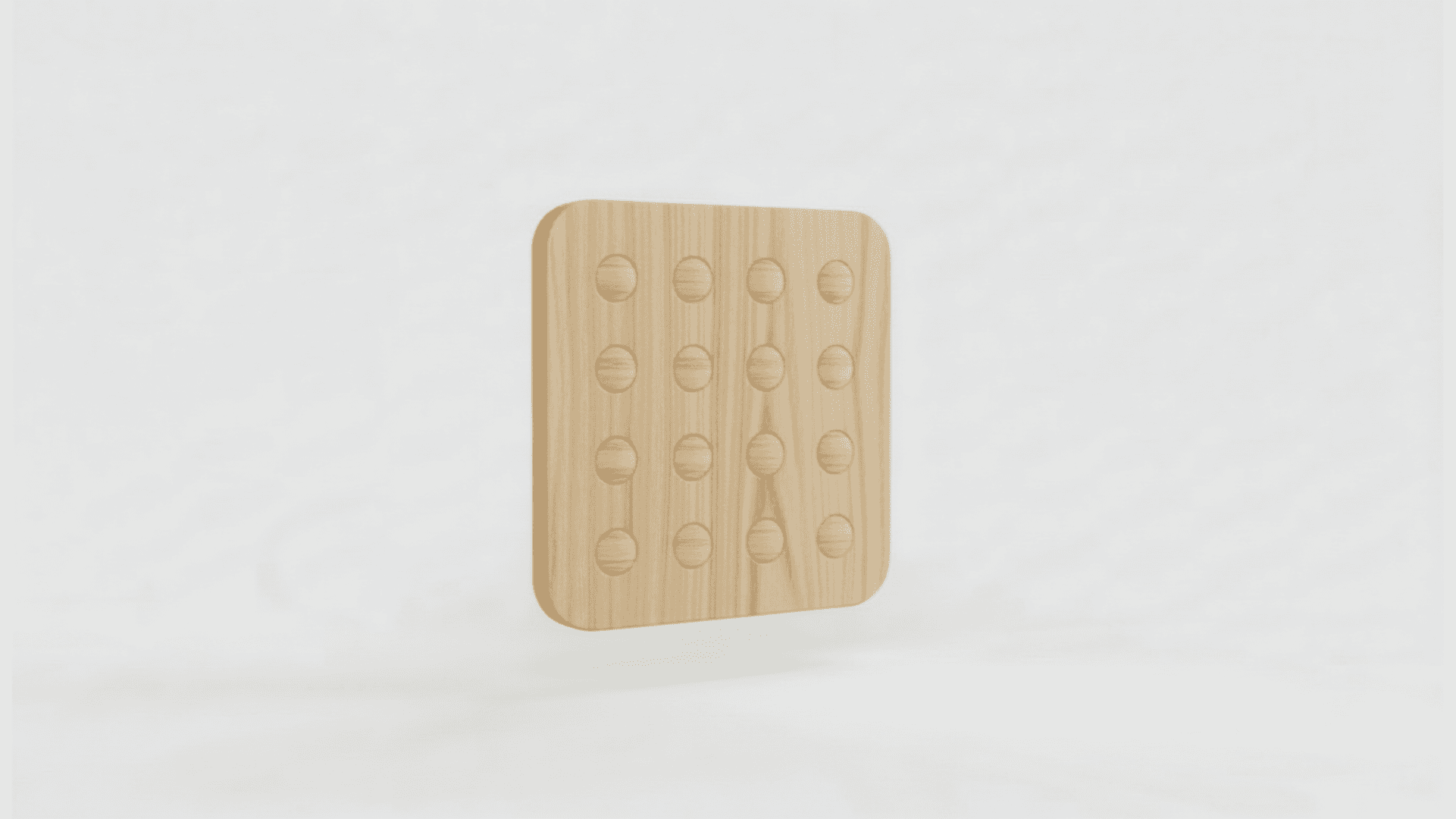
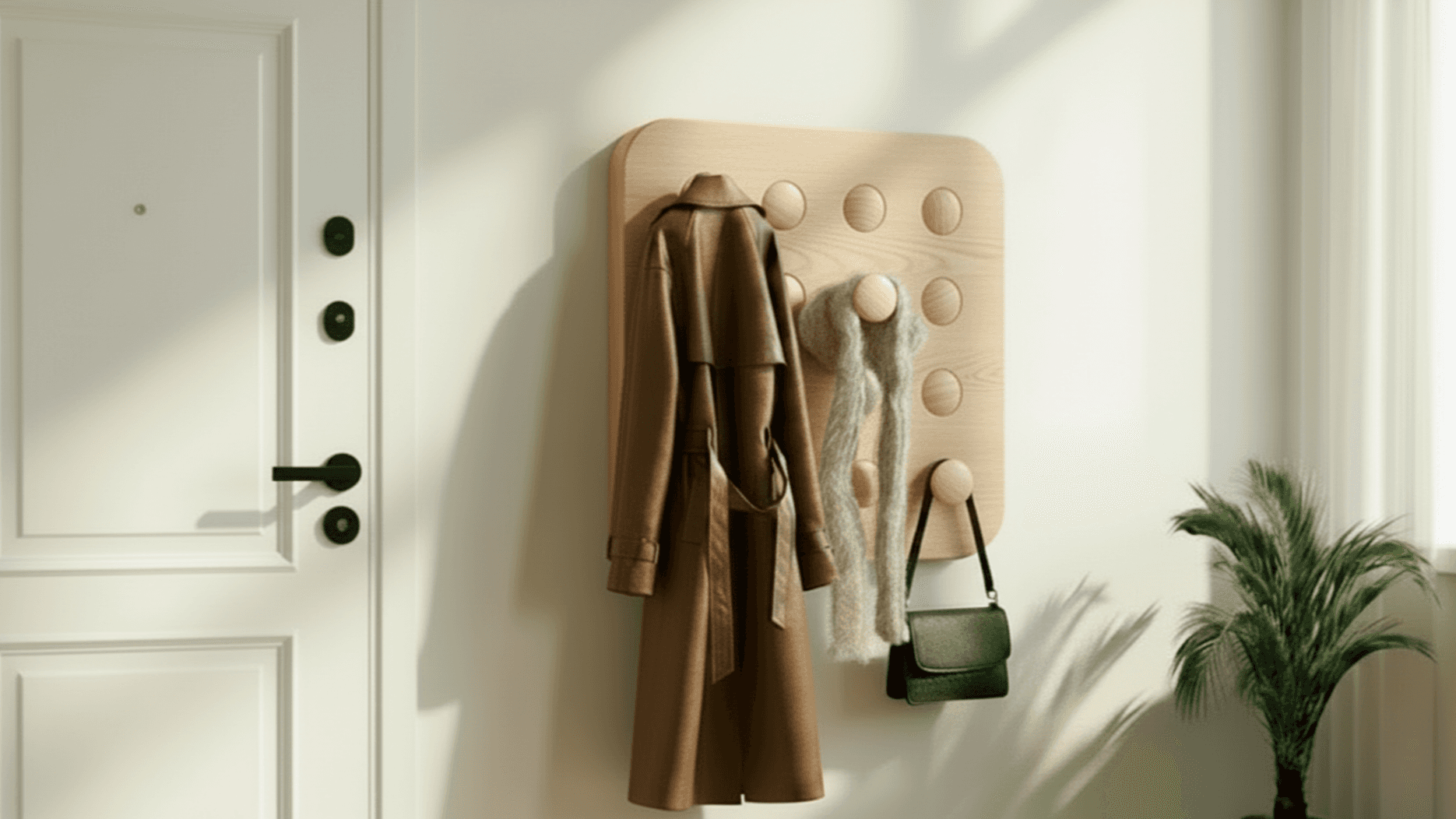
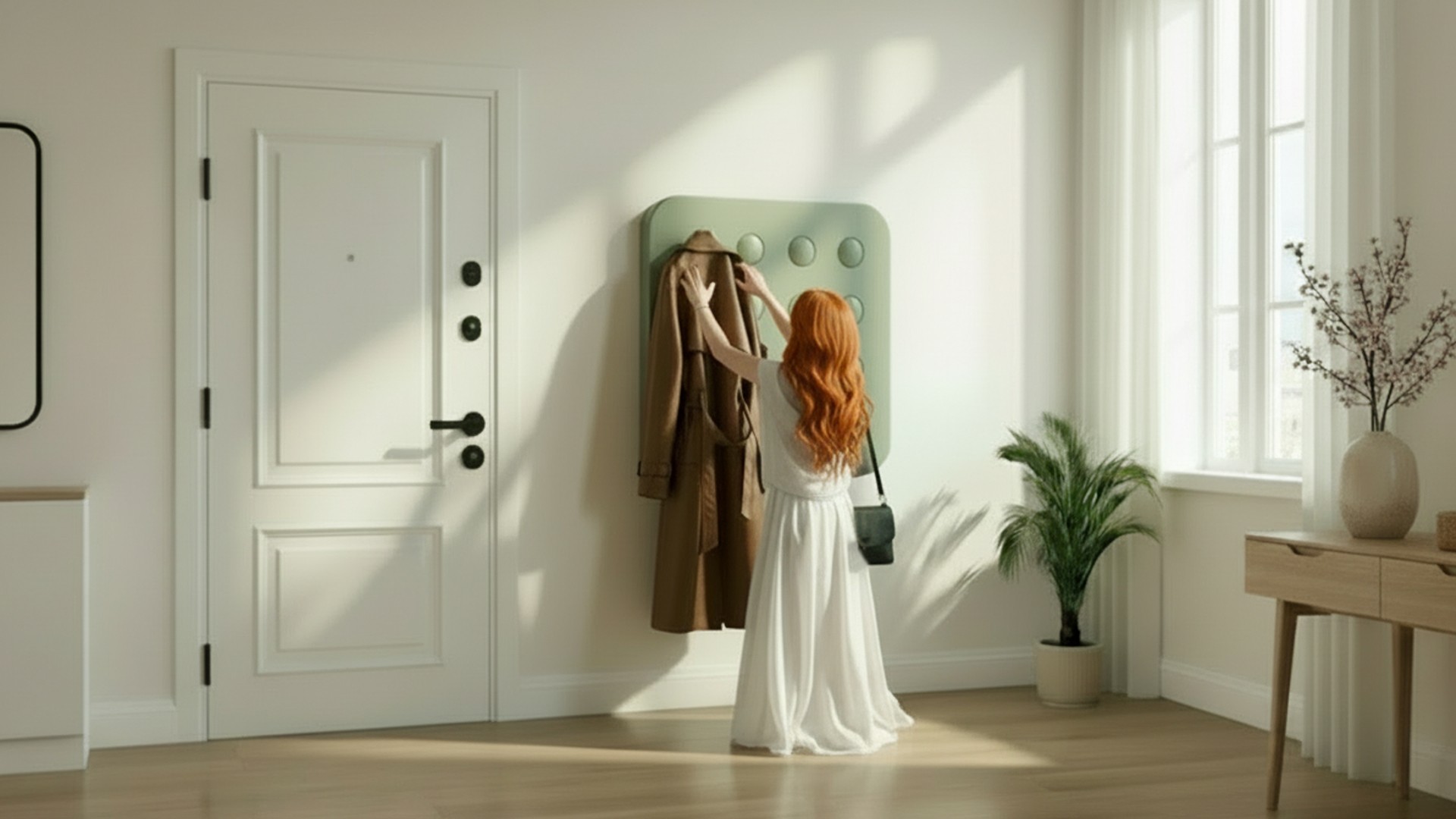
This project explores a new way of interacting with a wall-mounted coat rack by combining minimal form, tactile interaction, and personal organization. The design consists of a square metal panel with 16 circular push elements. Each circle can be pressed to extend outward, creating a hanging point for coats, bags, or accessories etc. When not in use, the surface remains flat and visually calm.

The product is designed for entry spaces, where users prepare to leave home and need quick access to daily essentials.


Challenge

Traditional coat racks often create visual clutter due to overlapping hooks and stacked coats, resulting in disorganized and crowded entry spaces. Most designs offer limited flexibility for different users and rely on static structures that do not adapt to daily changing needs. In addition, users in entry spaces frequently struggle to remember small but important items, maintain a clean and organized environment, and personalize shared coat racks, leading to frustration in a space that should support smooth daily transitions.


‘ʼHow might we design a coat rack that is adaptive, personal, and calm, while encouraging intentional interaction?ʼʼ


Result

A calm, flat surface that transforms through push only when interaction is required can significantly reduce visual clutter while improving usability in everyday routines.

Overview

This project explores a new way of interacting with a wall-mounted coat rack by combining minimal form, tactile interaction, and personal organization. The design consists of a square metal panel with 16 circular push elements. Each circle can be pressed to extend outward, creating a hanging point for coats, bags, or accessories etc. When not in use, the surface remains flat and visually calm.

The product is designed for entry spaces, where users prepare to leave home and need quick access to daily essentials.


Challenge

Traditional coat racks often create visual clutter due to overlapping hooks and stacked coats, resulting in disorganized and crowded entry spaces. Most designs offer limited flexibility for different users and rely on static structures that do not adapt to daily changing needs. In addition, users in entry spaces frequently struggle to remember small but important items, maintain a clean and organized environment, and personalize shared coat racks, leading to frustration in a space that should support smooth daily transitions.


‘ʼHow might we design a coat rack that is adaptive, personal, and calm, while encouraging intentional interaction?ʼʼ


Result

A calm, flat surface that transforms through push only when interaction is required can significantly reduce visual clutter while improving usability in everyday routines.

Overview

This project explores a new way of interacting with a wall-mounted coat rack by combining minimal form, tactile interaction, and personal organization. The design consists of a square metal panel with 16 circular push elements. Each circle can be pressed to extend outward, creating a hanging point for coats, bags, or accessories etc. When not in use, the surface remains flat and visually calm.

The product is designed for entry spaces, where users prepare to leave home and need quick access to daily essentials.


Challenge

Traditional coat racks often create visual clutter due to overlapping hooks and stacked coats, resulting in disorganized and crowded entry spaces. Most designs offer limited flexibility for different users and rely on static structures that do not adapt to daily changing needs. In addition, users in entry spaces frequently struggle to remember small but important items, maintain a clean and organized environment, and personalize shared coat racks, leading to frustration in a space that should support smooth daily transitions.


‘ʼHow might we design a coat rack that is adaptive, personal, and calm, while encouraging intentional interaction?ʼʼ


Result

A calm, flat surface that transforms through push only when interaction is required can significantly reduce visual clutter while improving usability in everyday routines.

Overview

This project aimed to create a distinct user experience for a manual coffee grinder by rethinking the traditional grinding mechanism and building a stronger emotional connection between the user and the product. Rather than the conventional rotating motion found in most grinders, the design introduces a new pull-based grinding action, inspired by manual vegetable choppers. Combined with natural materials like wood, this grinder offers both tactile warmth and a fresh interaction style.


Challenge

Traditional coat racks often create visual clutter due to overlapping hooks and stacked coats, resulting in disorganized and crowded entry spaces. Most designs offer limited flexibility for different users and rely on static structures that do not adapt to daily changing needs. In addition, users in entry spaces frequently struggle to remember small but important items, maintain a clean and organized environment, and personalize shared coat racks, leading to frustration in a space that should support smooth daily transitions.


‘ʼHow might we design a coat rack that is adaptive, personal, and calm, while encouraging intentional interaction?ʼʼ


Result

A calm, flat surface that transforms through push only when interaction is required can significantly reduce visual clutter while improving usability in everyday routines.

Design Approach

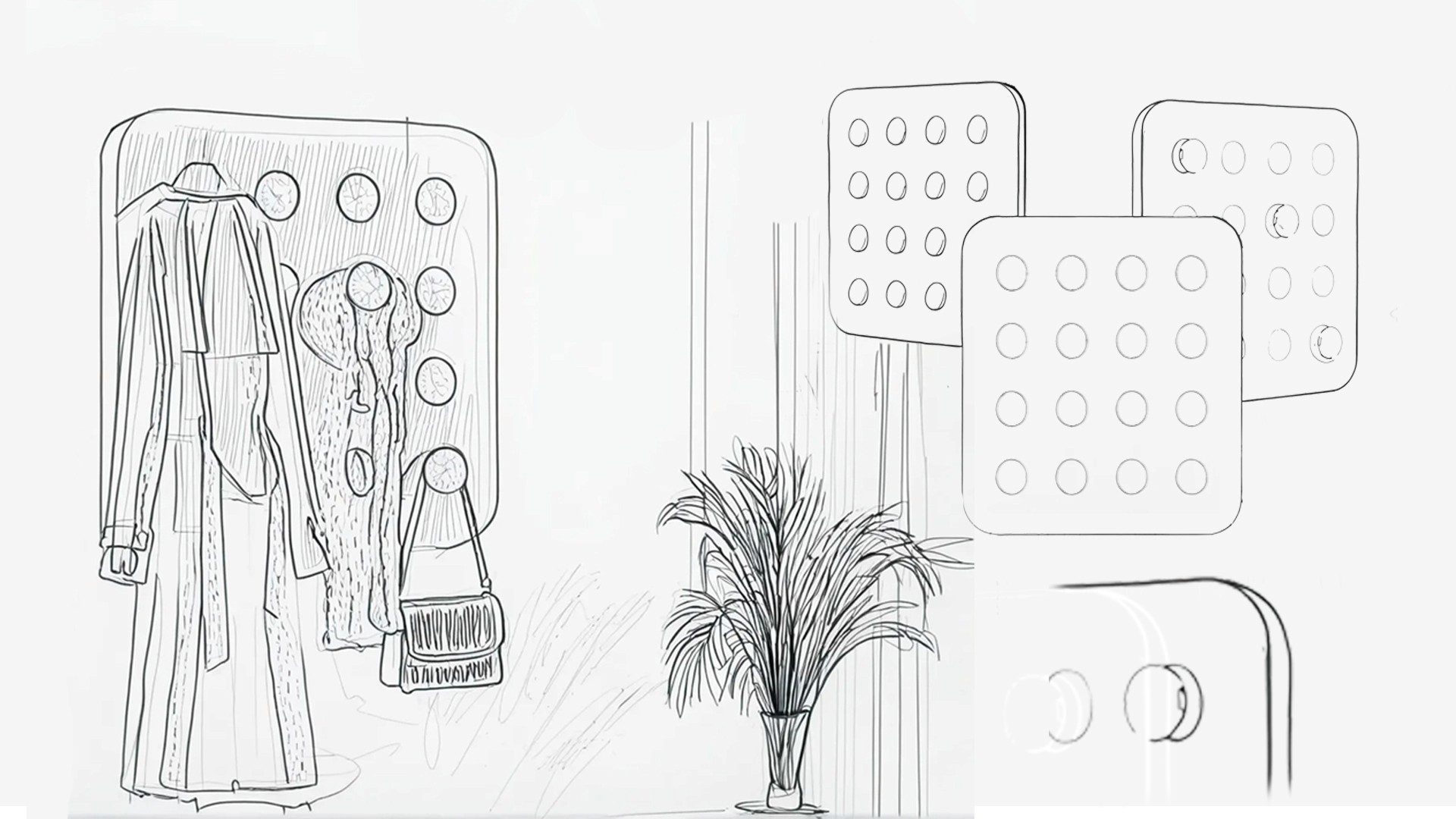
The design approach prioritizes interaction over fixed hooks, giving users direct control over space while maintaining a minimal visual language. The product offers multifunctionality without added complexity, introducing hidden functionality that appears only when needed and keeps the surface clean and unobtrusive when inactive. Based on everyday observations of entry spaces, users often hang coats on top of each other despite having multiple hooks, leading to clutter and inefficiency. As entry areas are transitional and time sensitive, reducing visual noise and making better use of flat wall surfaces becomes essential to support calm and efficient daily routines.

Design Goals

The design uses square geometry for clarity and stability, softened by rounded corners and repeated circular elements that create visual rhythm. When inactive, the surface remains flush and visually calm, allowing it to blend into different interior styles. Made from a powder coated metal body with a matte finish, the product reduces reflections and fingerprints while enabling magnetic functionality. The soft, muted green color enhances a calm, welcoming atmosphere. A simple, durable construction with an integrated push mechanism ensures efficient production, scalability, and a long product lifespan, supporting both usability and sustainability

Key Contributions

A calm, flat surface that transforms through push only when interaction is required can significantly reduce visual clutter while improving usability in everyday routines.